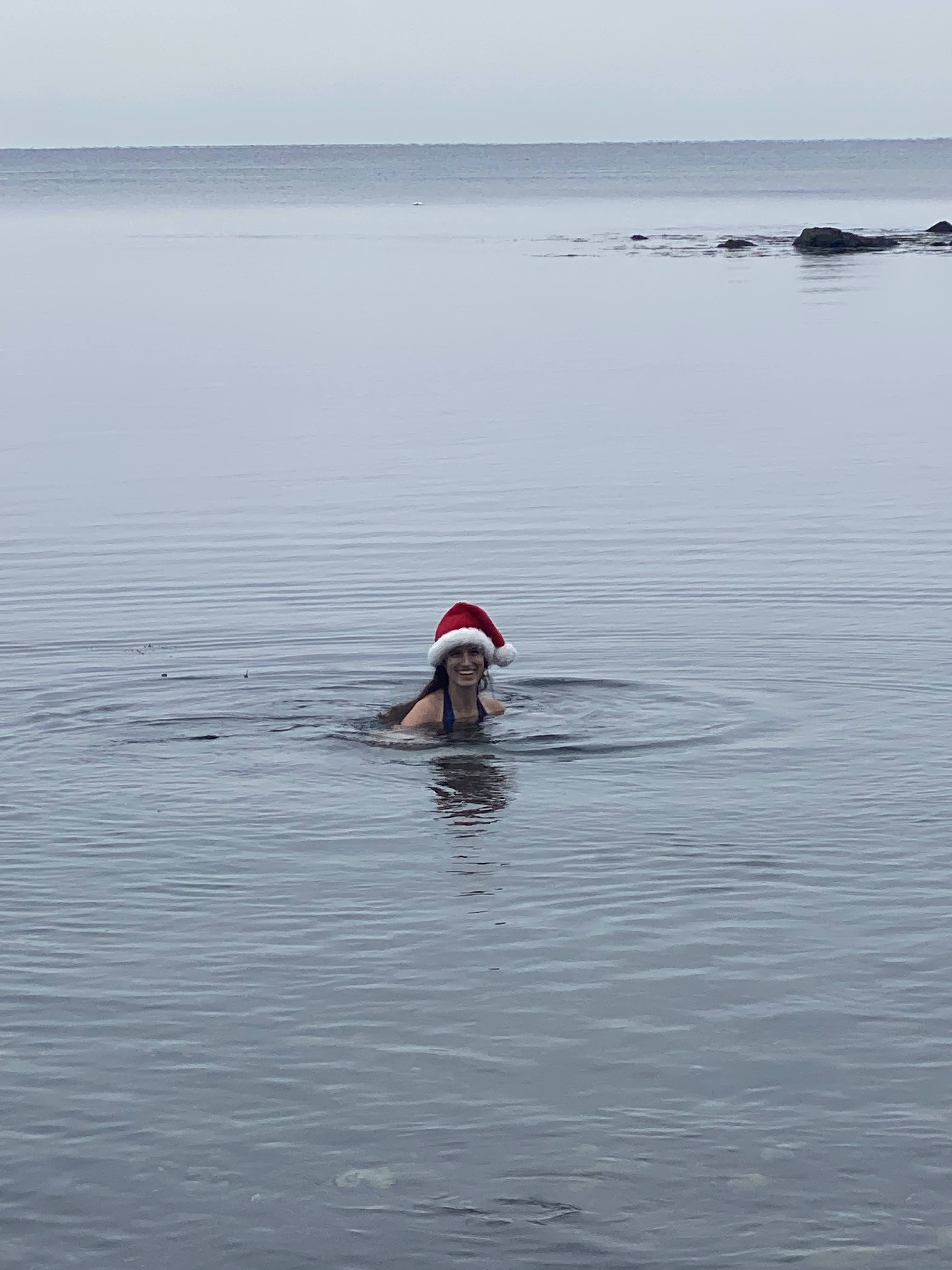
We did it! My friend Caitlin and I swam the entire fall and winter. Starting October 1st we got into the ocean at least once a week (usually more; we’re overachievers).
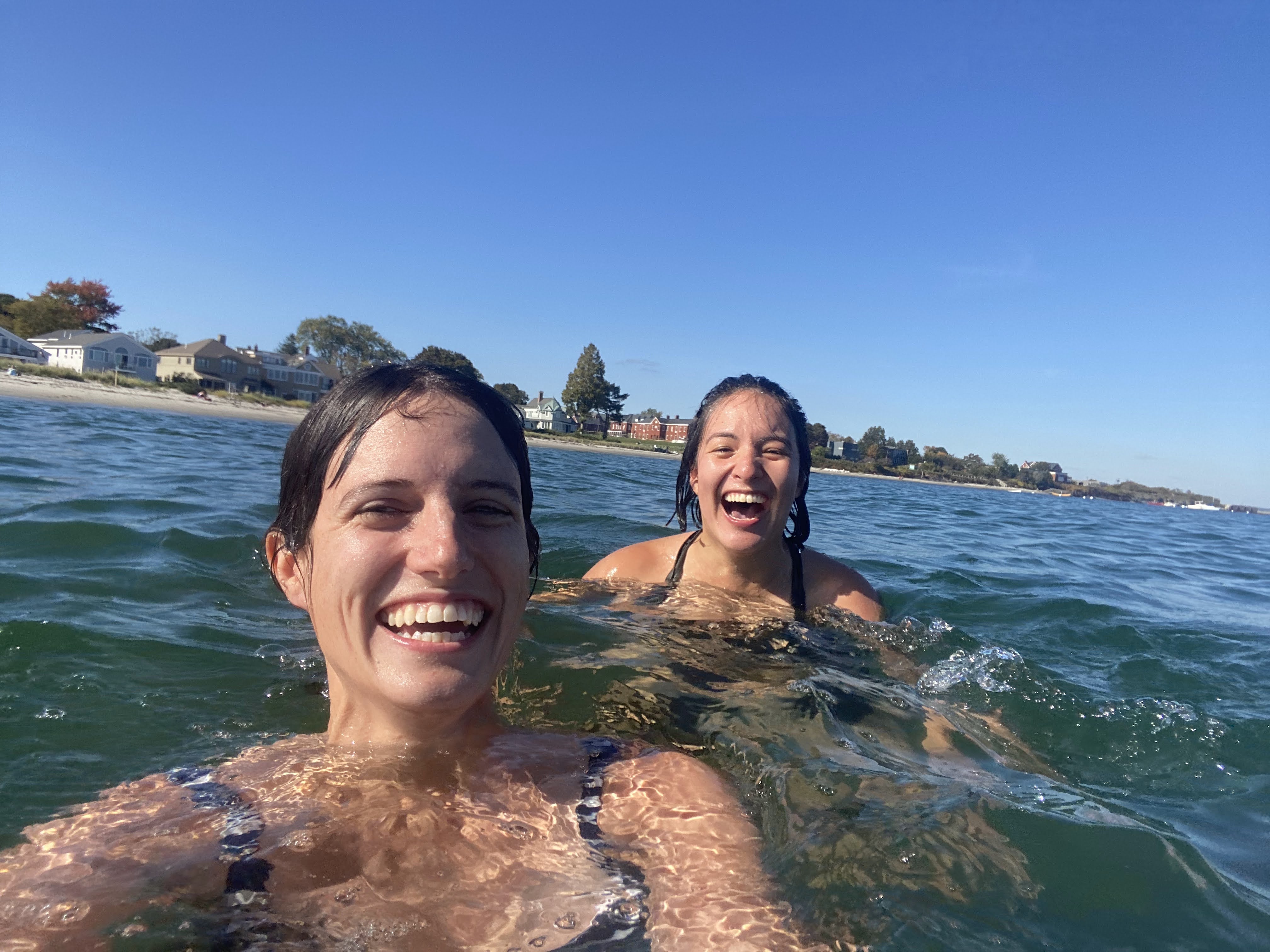
This was such an incredible new winter activity. I have always loved swimming in the ocean but going in, intentionally, throughout the winter has been a completely new experience. I’ve learned the tides, and the rock patterns in various coves. We learned how much people like to comment from the beach, and how everyone would like to inform us about Wim Hof, a man I truly could not care less about.
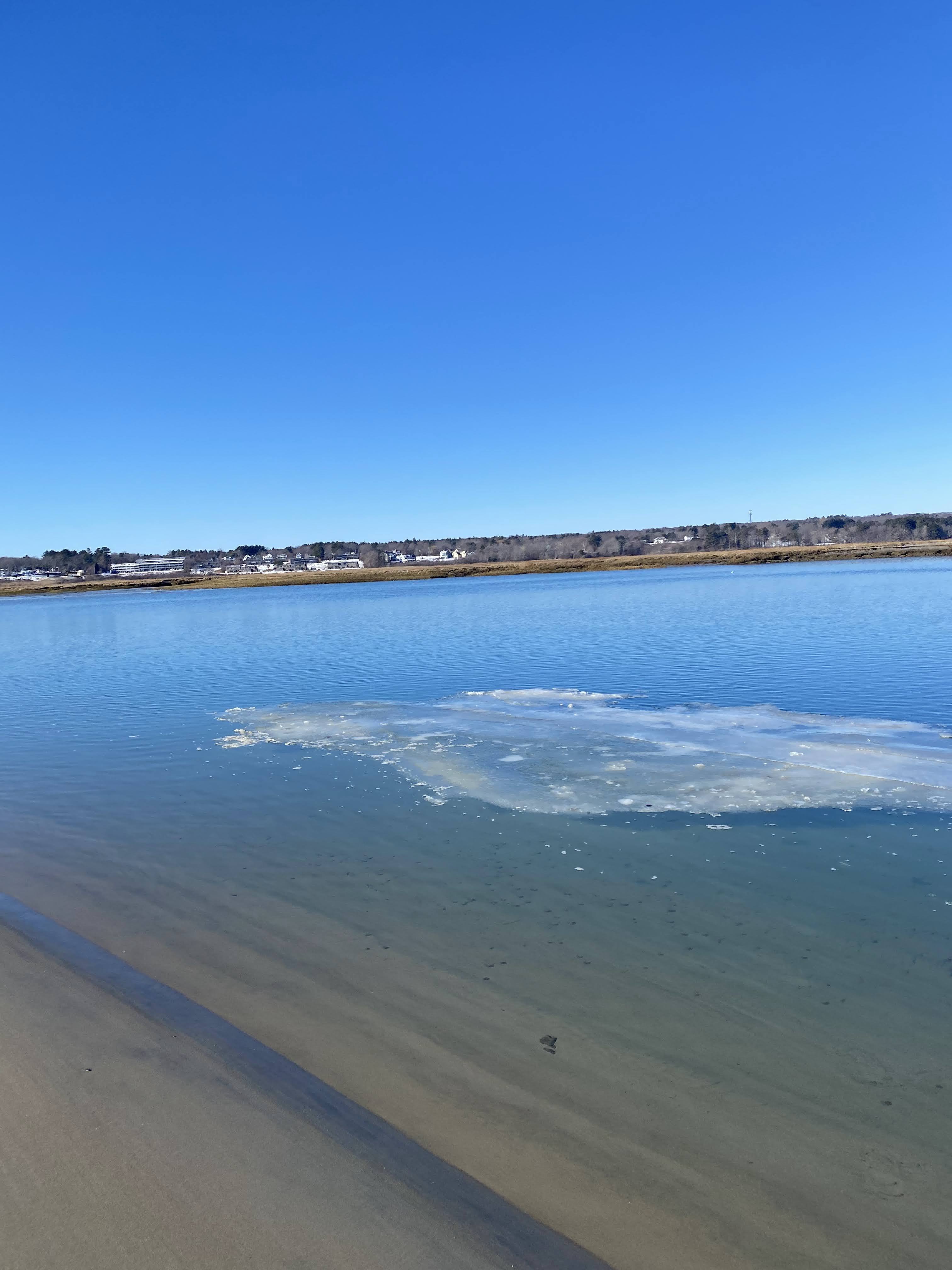
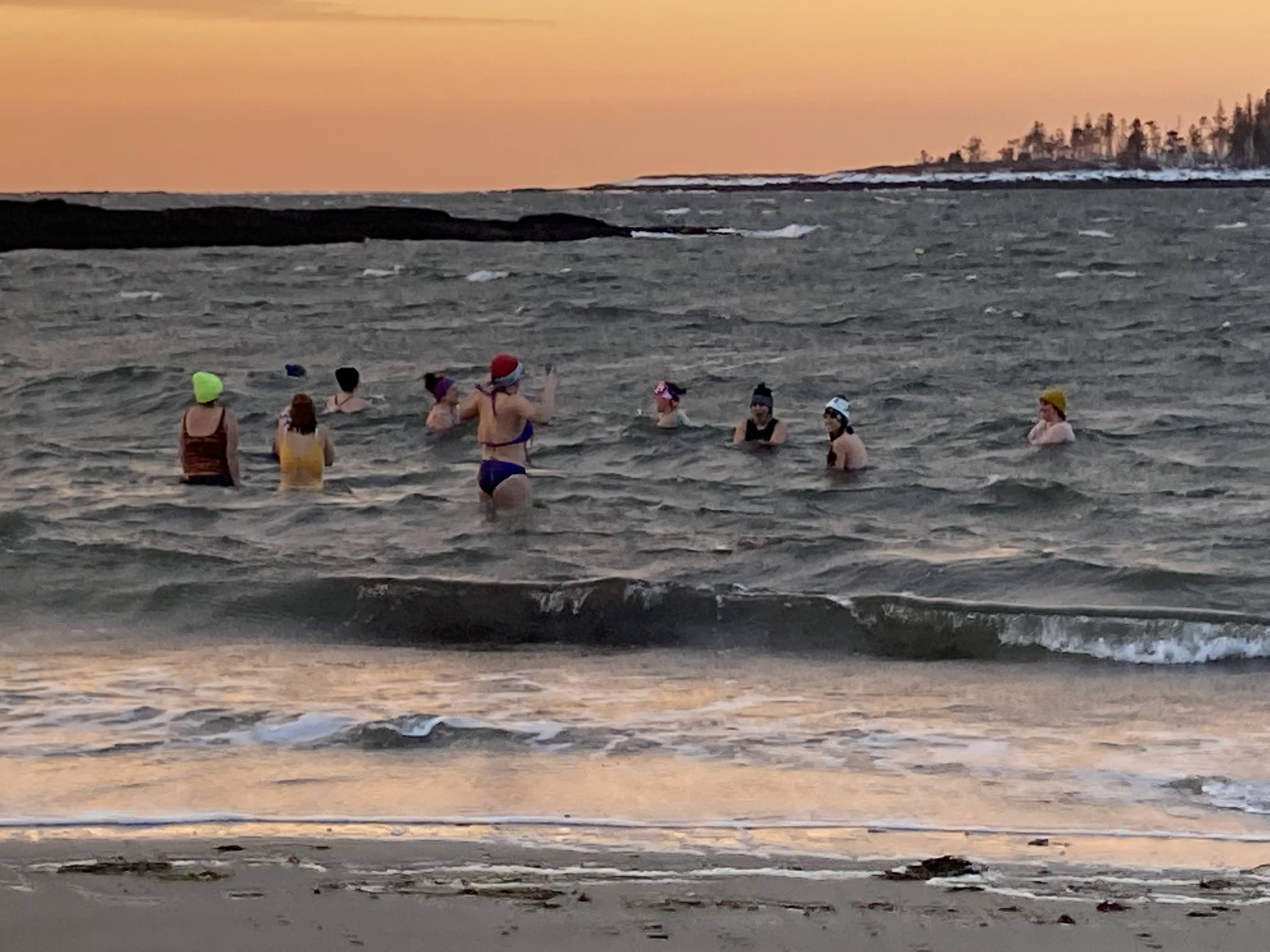
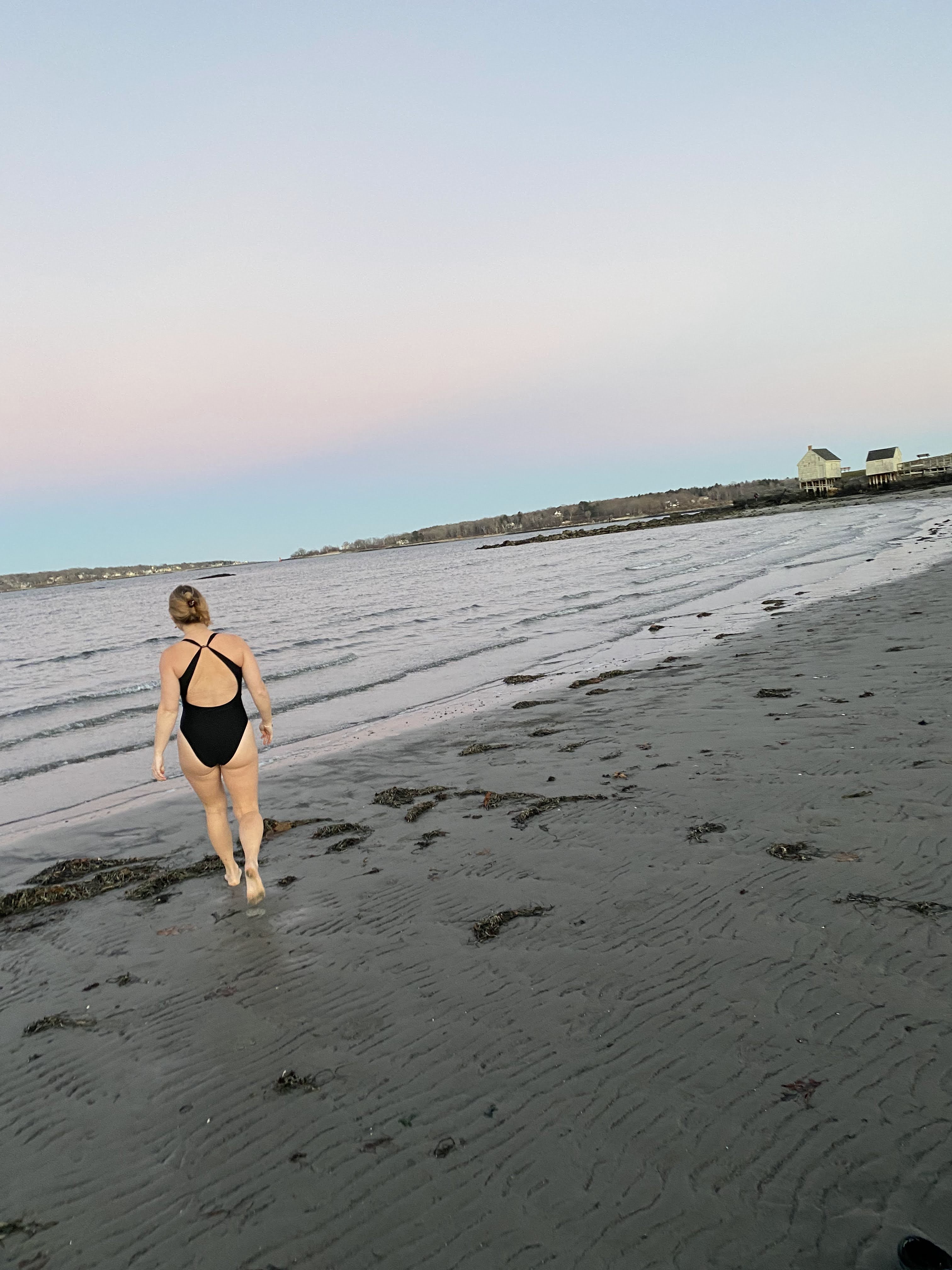
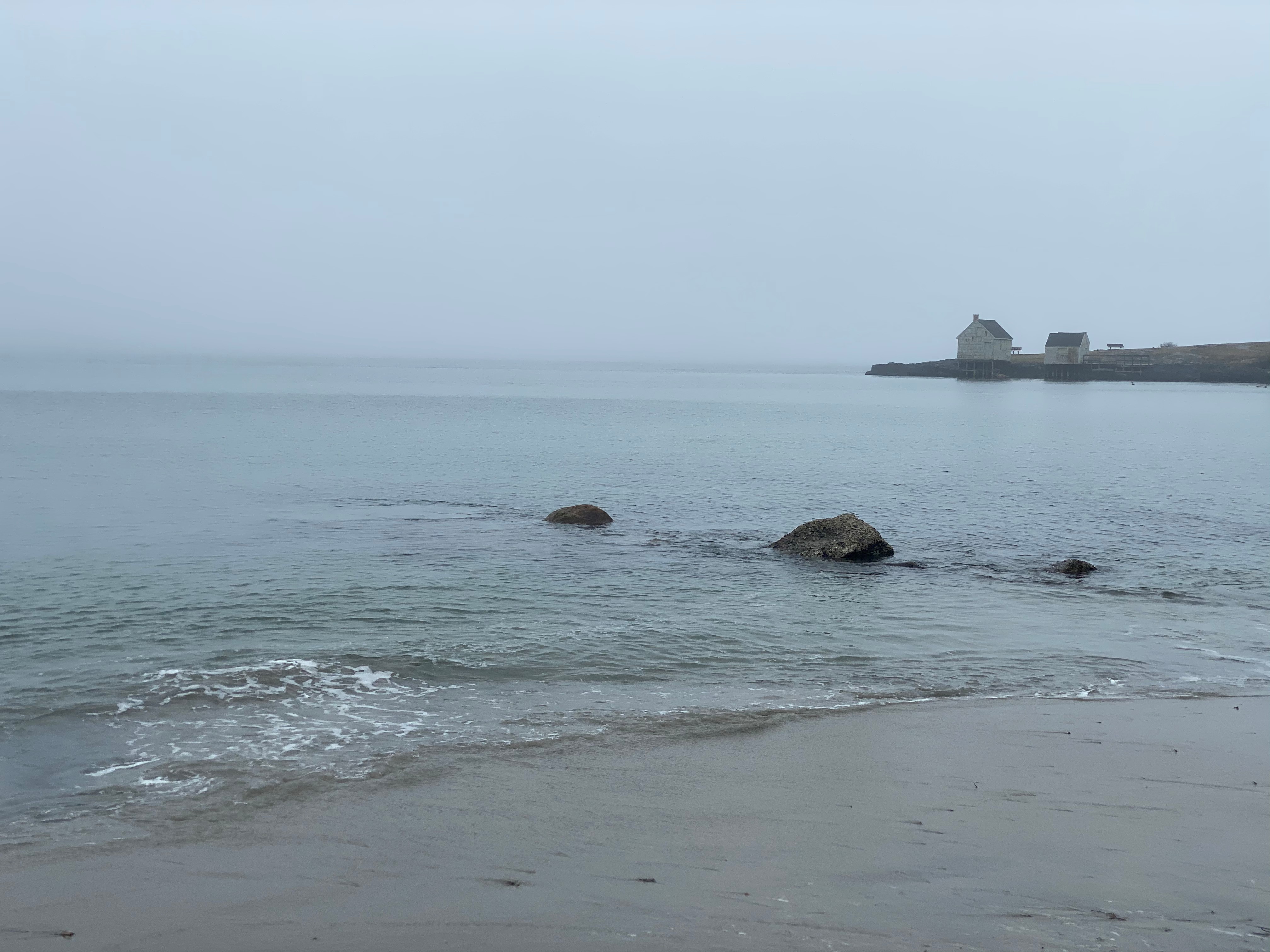
In the past six months I swam in Casco Bay, Penobscot Bay (both east and west), swam in the Presumpscot River and Highland Lake. For the first time ever I swam on the West Coast off Southern California, and for the millionth time I swam off New Castle in what my great-uncle always made sure to tell us was the Gulf of Maine, not the Atlantic. I swam with old friends and huge groups of new friends thanks to Two Maine Mermaids, the group that started the challenge in the fall, and that hosts monthly Full Moon Swims. We swam at sunrise and moonrise, in snowstorms, in fog. I swam on Christmas Eve and New Years Eve and twice on the Winter Solstice. When we started in October the water temp was 54 and the coldest we ever saw was 33 (we didn’t measure this consistently). We stayed in for 5 minutes usually, but sometimes only 3 and sometimes 15, when the sun was hitting just right and the wind died down.
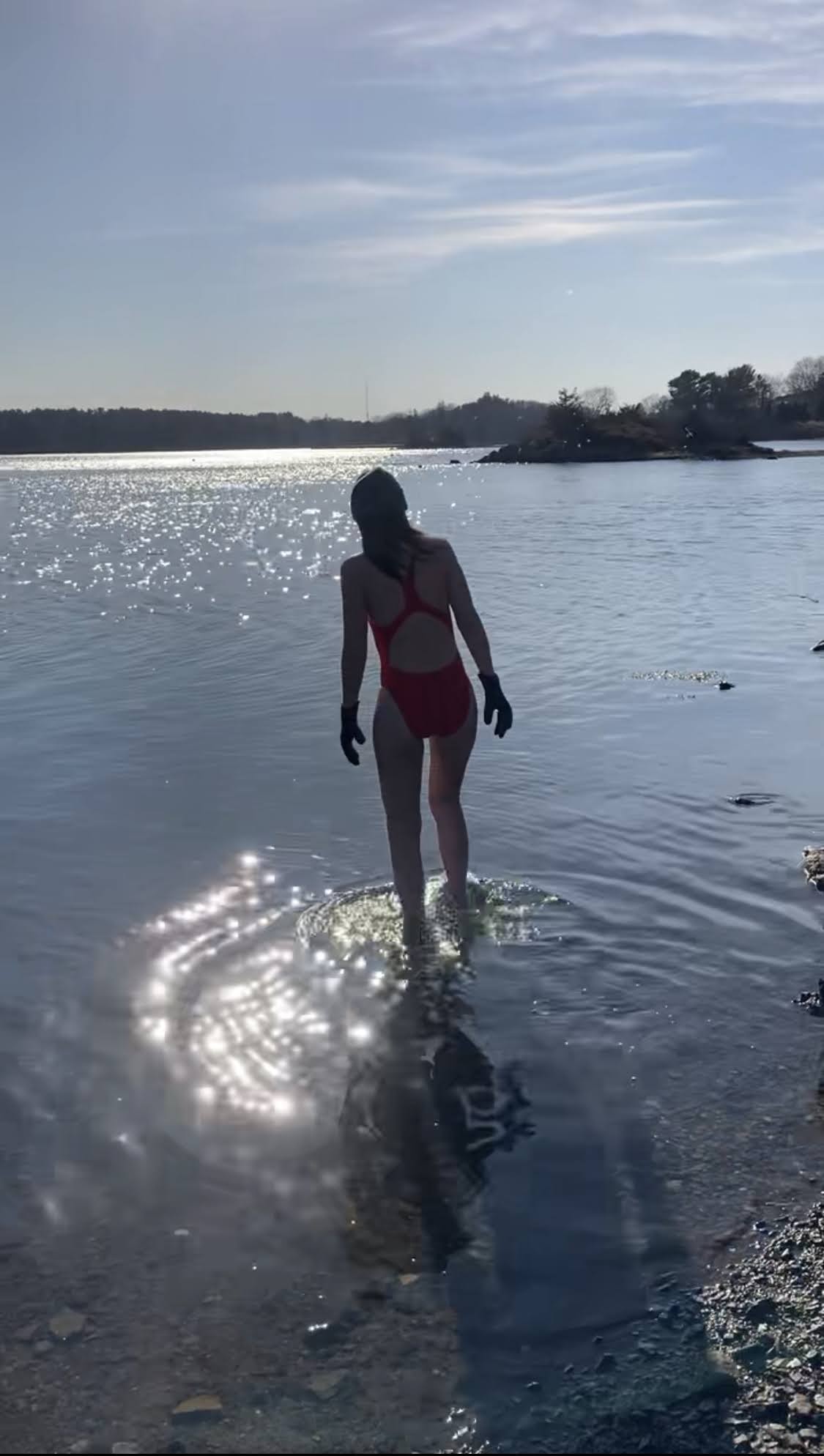
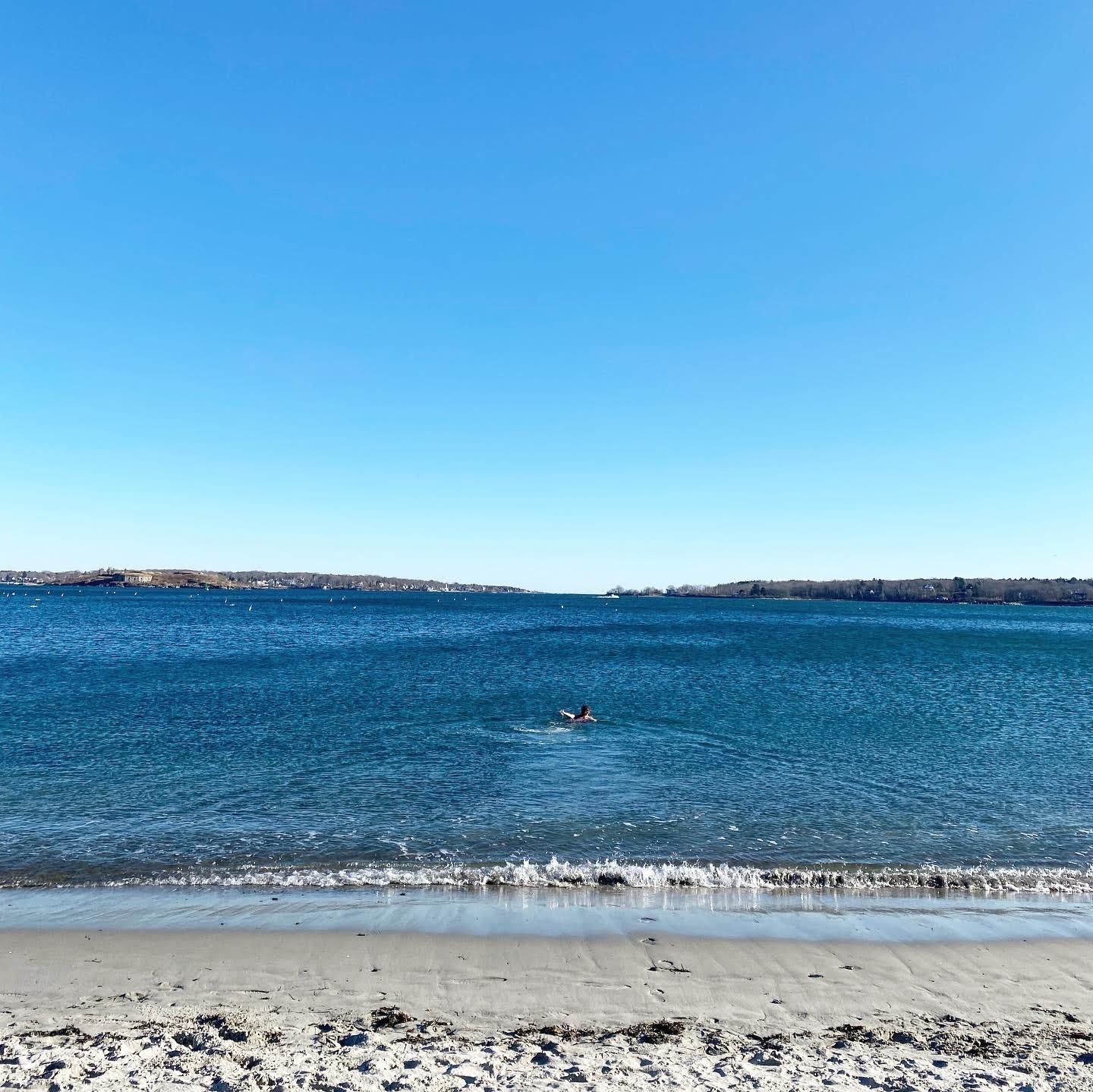
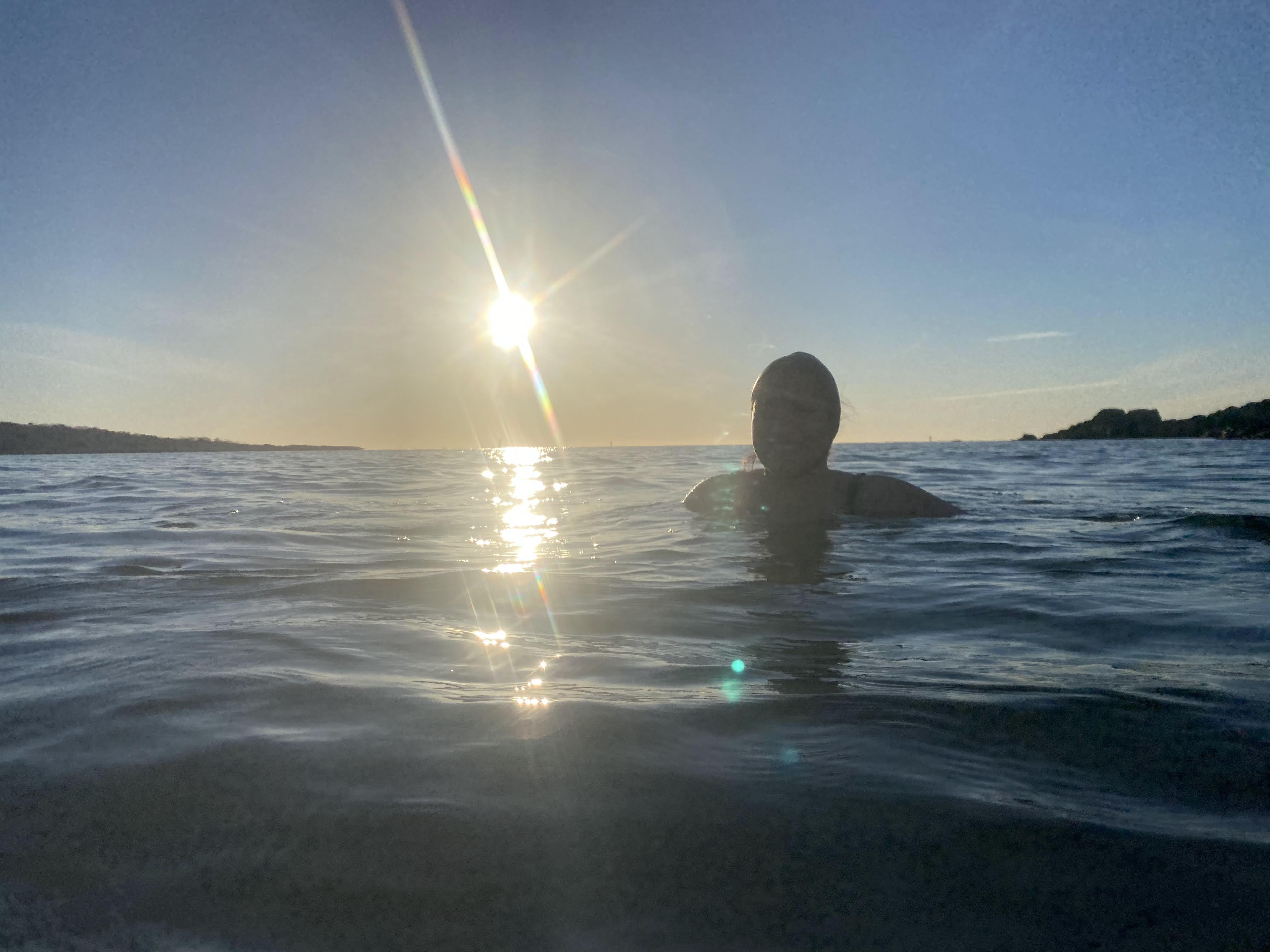

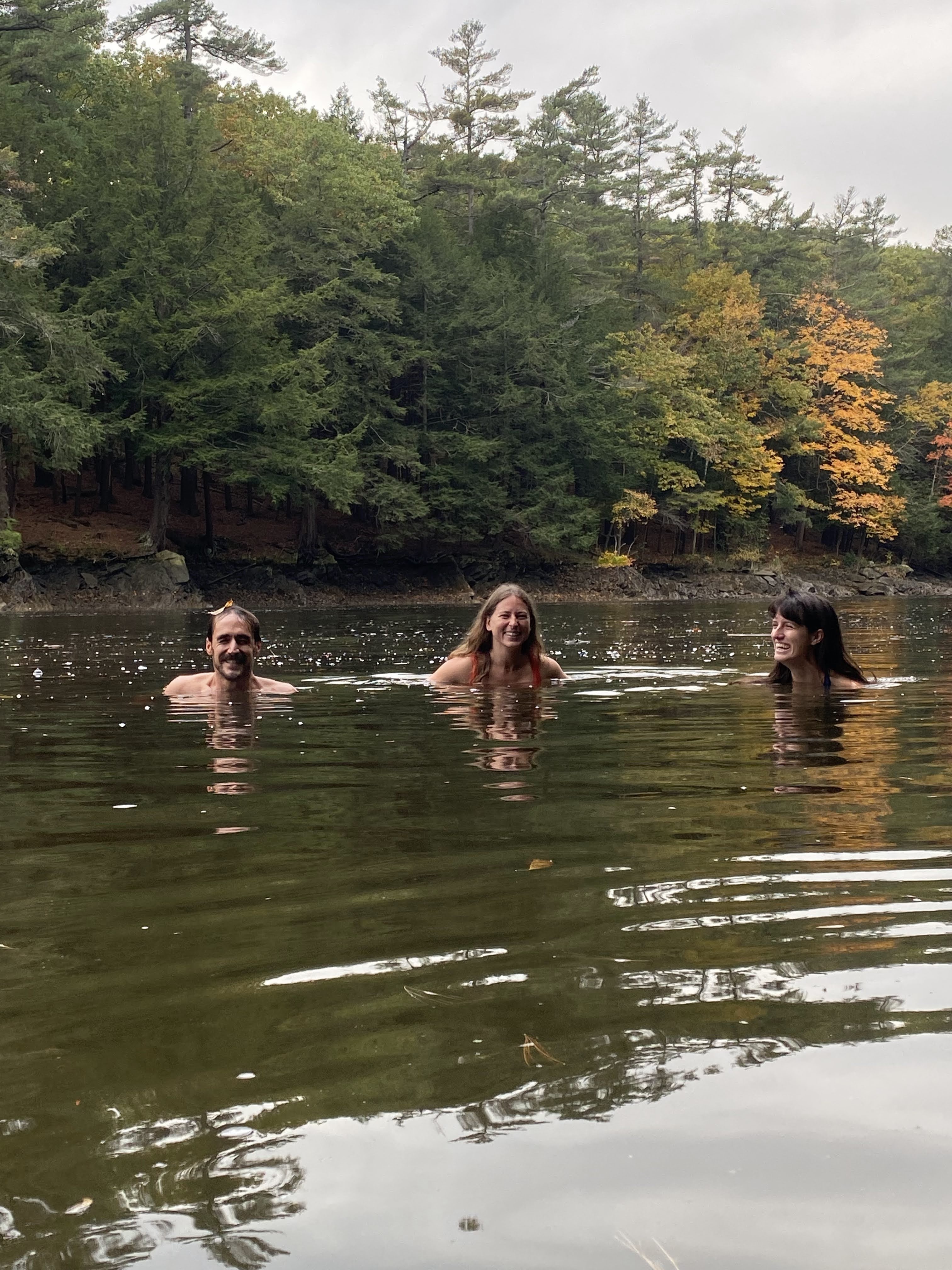
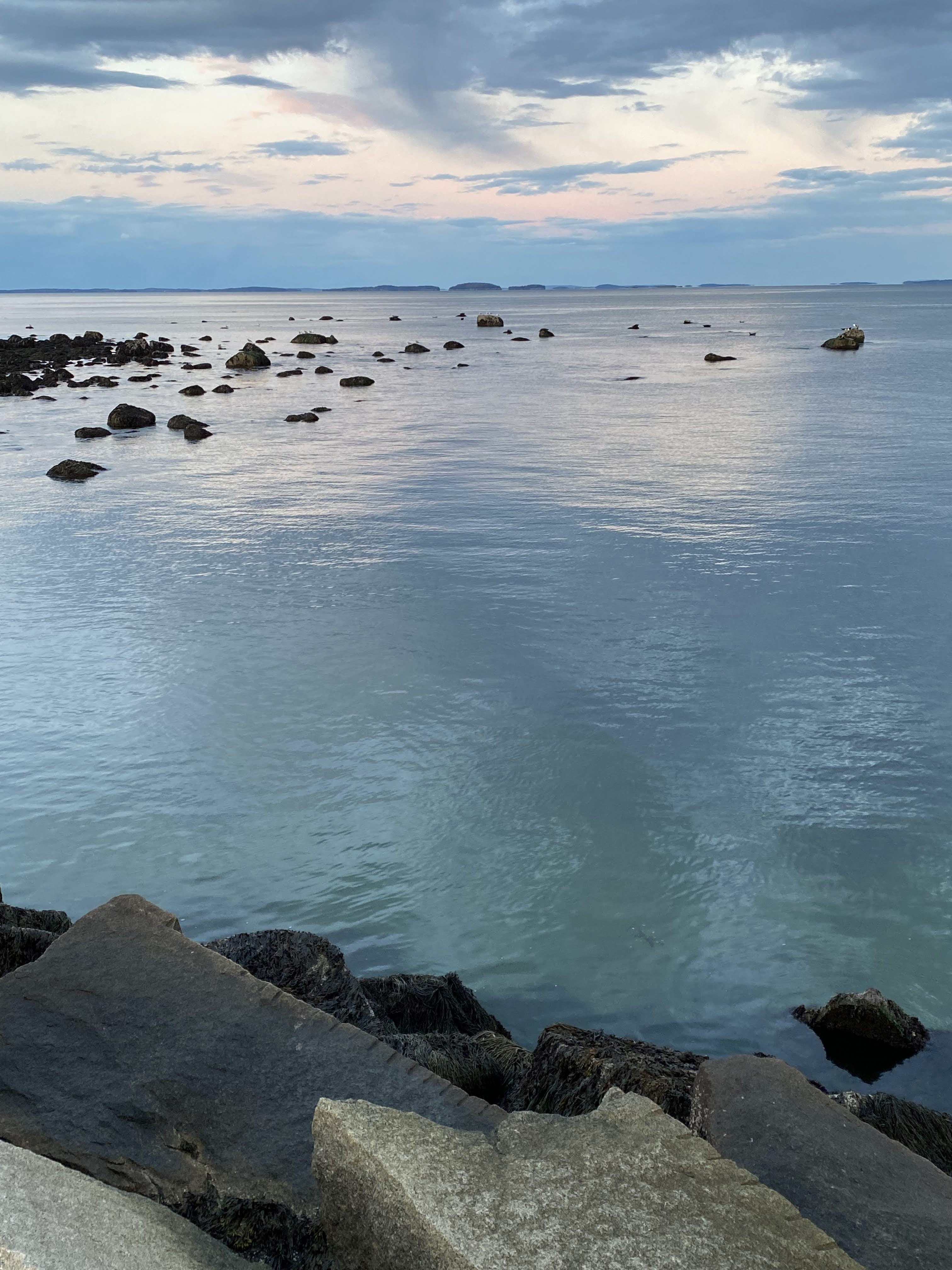
It’s called coldwater swimming, wild swimming, and open water swimming. They do it all over the world, really, but it’s most popular in Scandinavia (where they do it more dip-style, 30 seconds of very cold water followed by a sauna) and in the UK and Ireland, whose style of 5-10 minute swims, until you feel cold, has become the more popular way of doing it over here in the States (also probably due to our sadly low supply of saunas). There are, supposedly, a variety of physical and mental health benefits – increased white blood cell count, a stronger immune system, less depression. It’s hard to quantify though, which is something I love about it.
Also, it’s totally unpredictable. Sometimes it was easier to swim in the snow or the cold because then the water felt warmer than the air. Sometimes the water at one beach felt wildly colder than the cove just around the corner. Waves mean you get wetter faster, but your focus is on the waves and not the cold. Wind is the enemy, always. In the beginning we did a lot of “box breathing” but as our weekly swims progressed we were able to just walk in. But the improvement wasn’t linear.
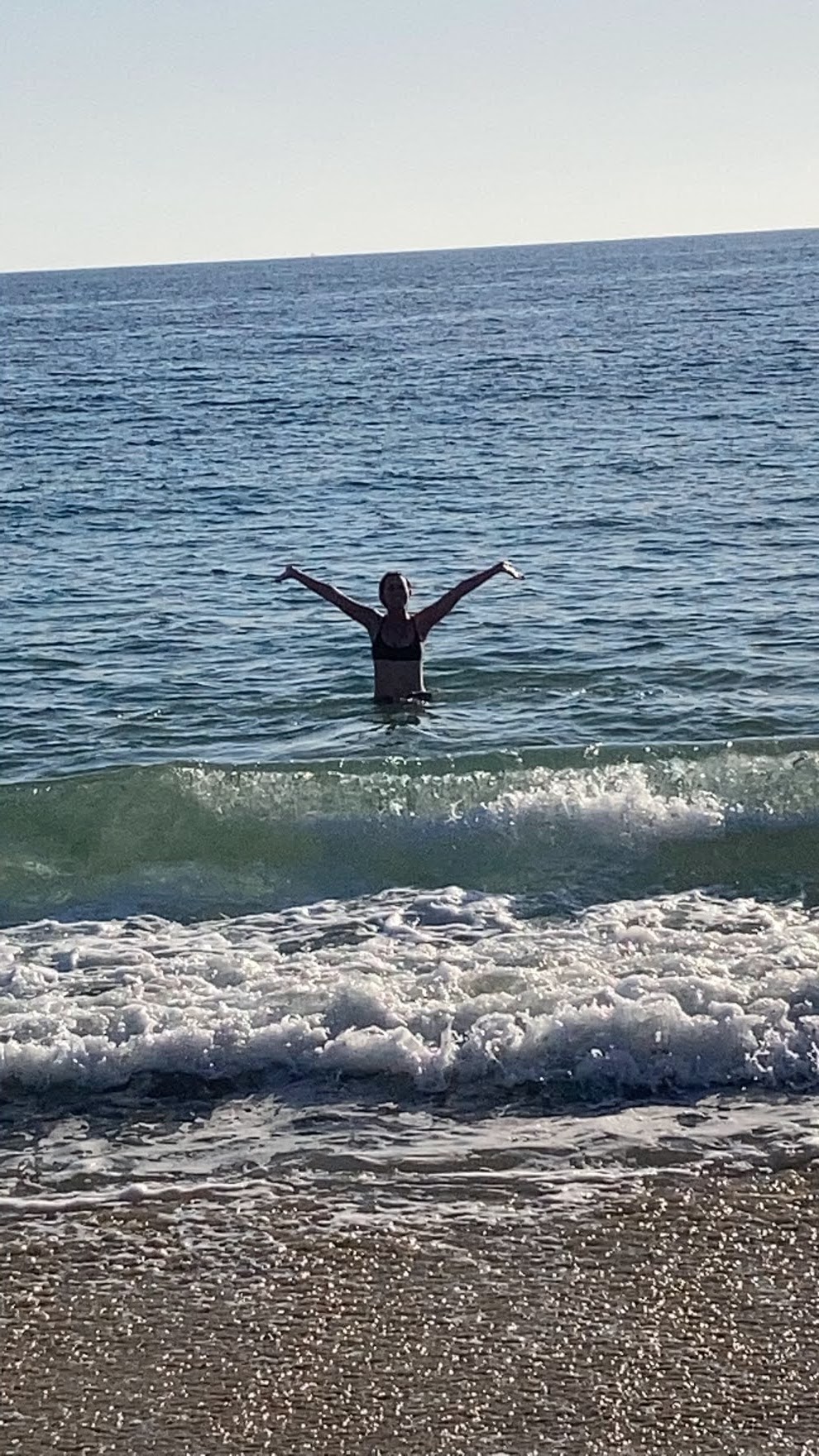
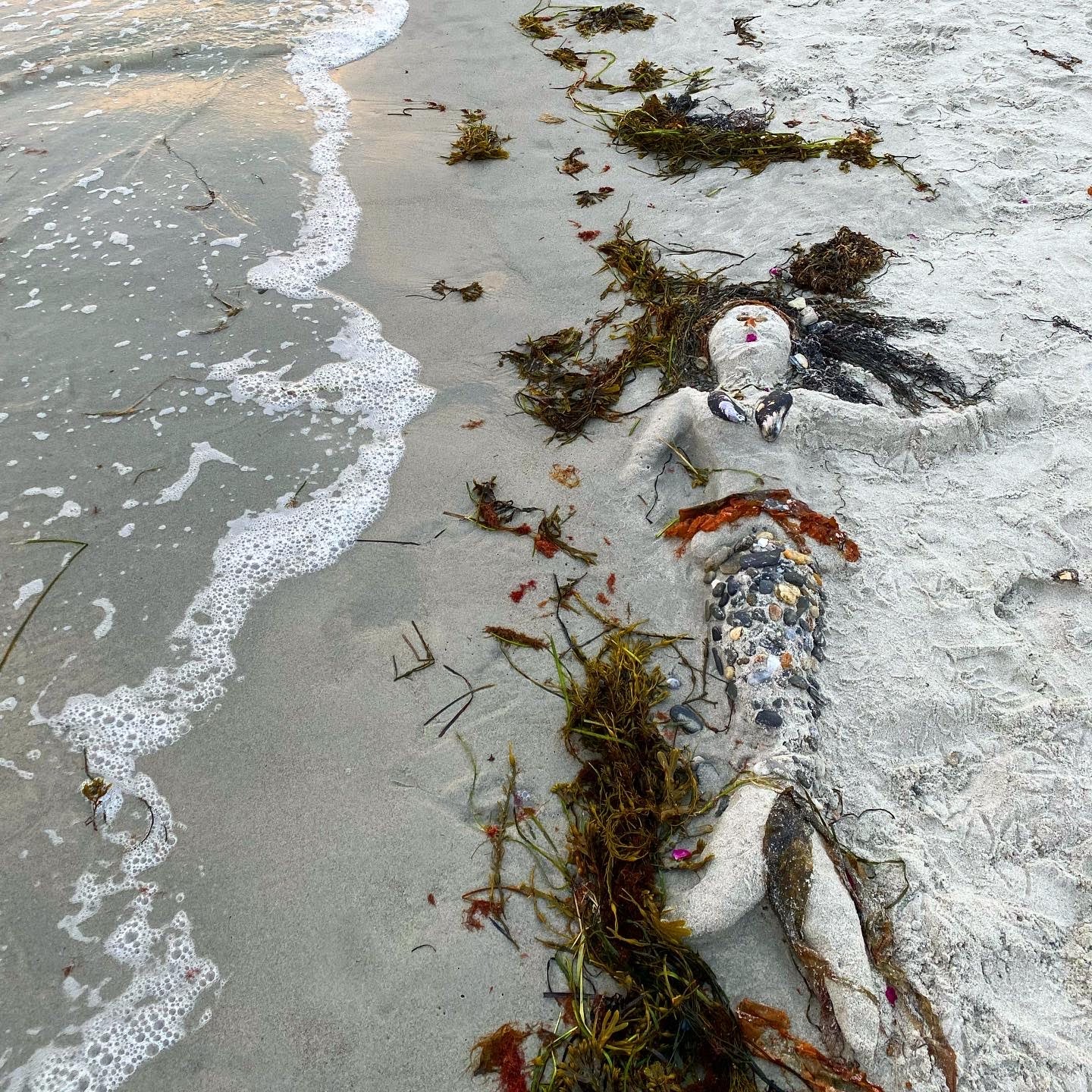
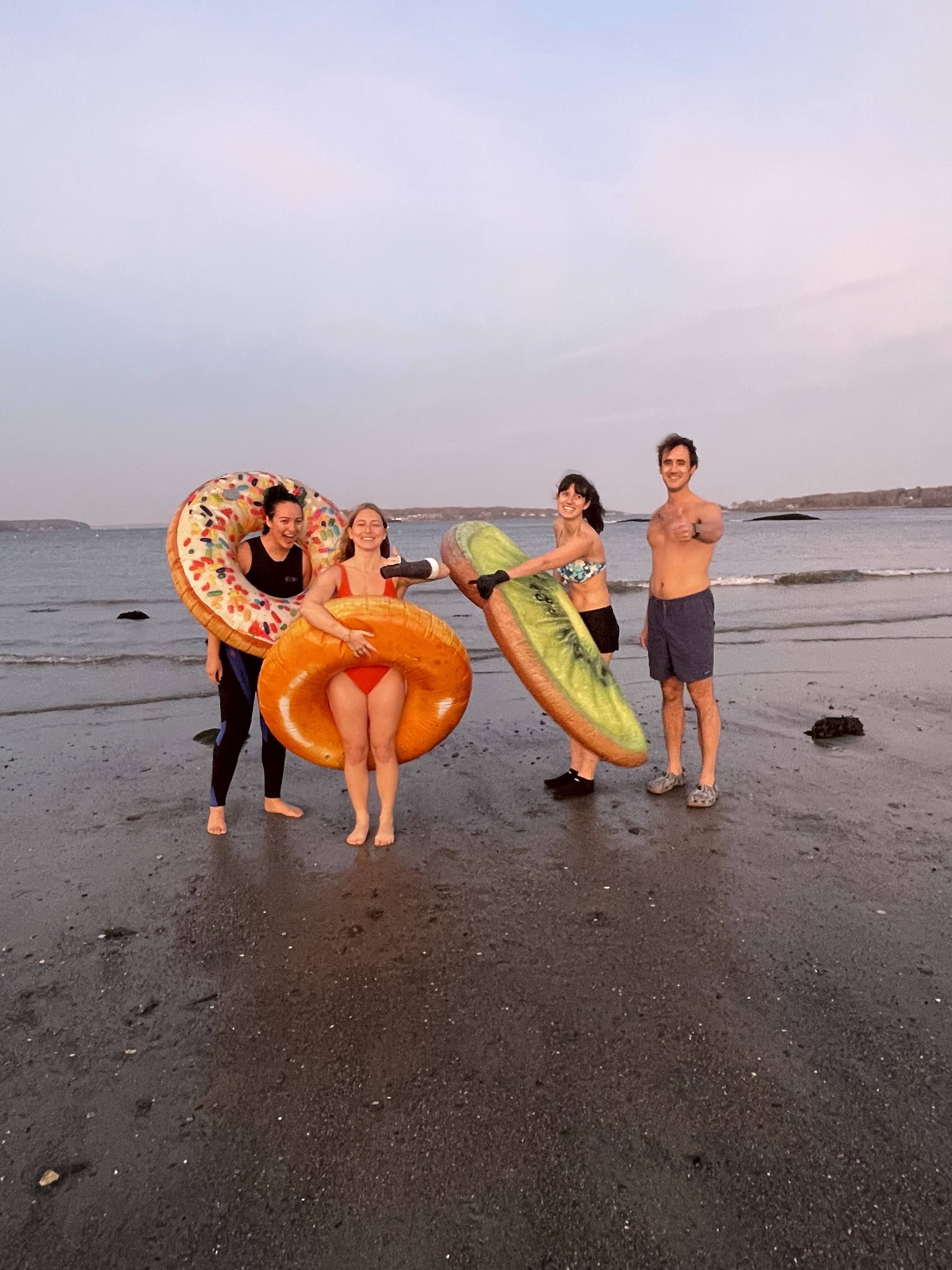
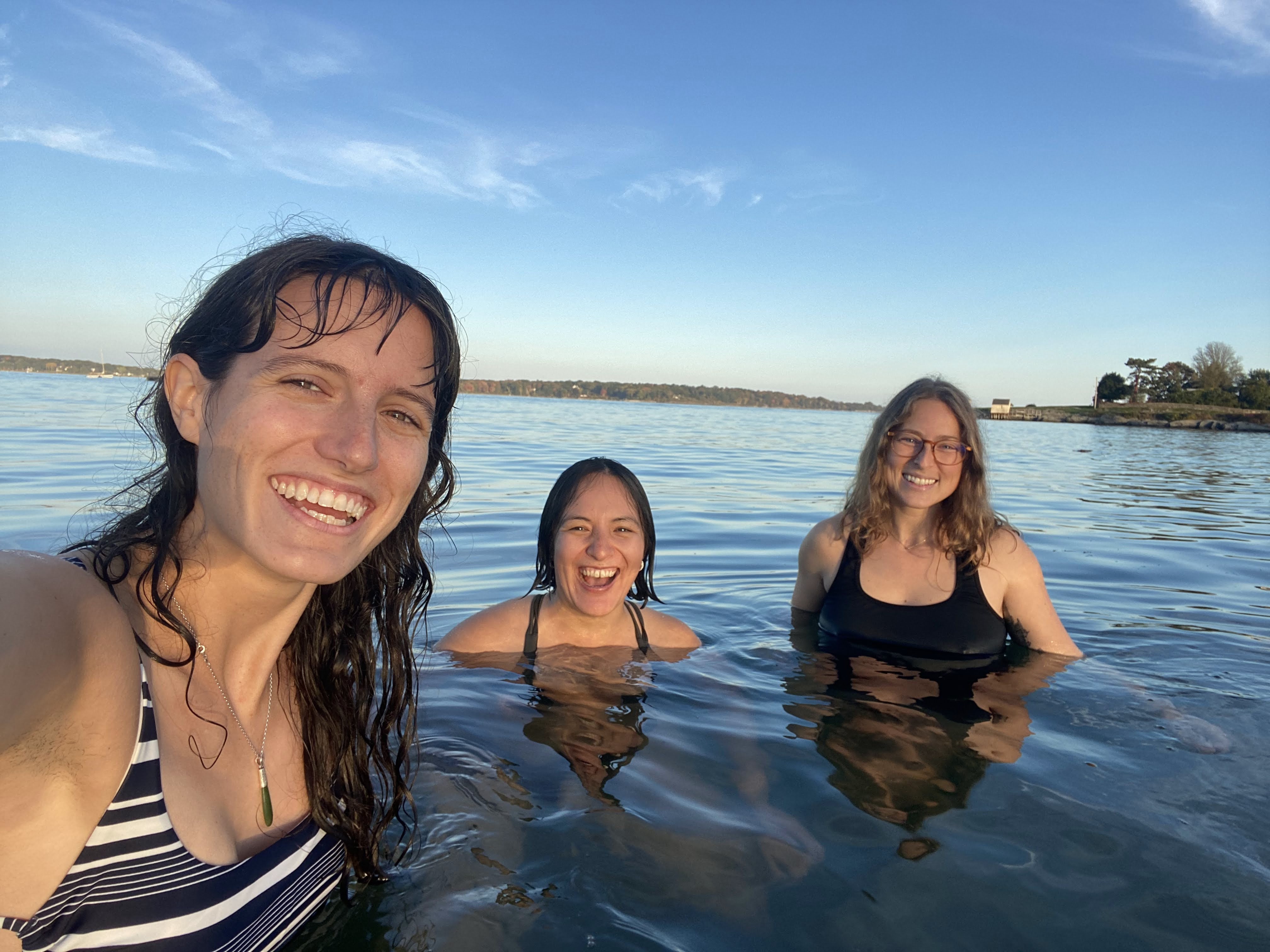
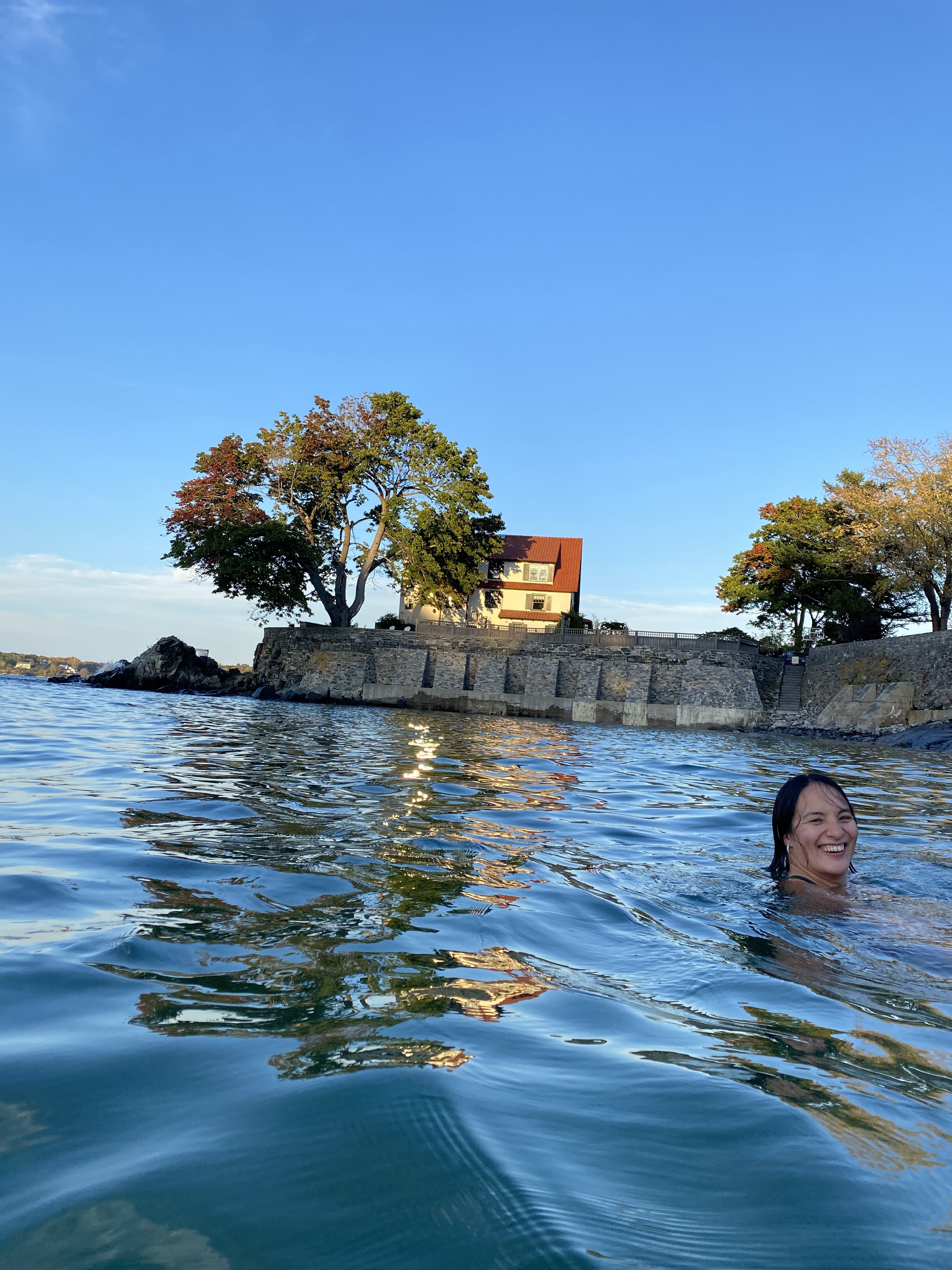
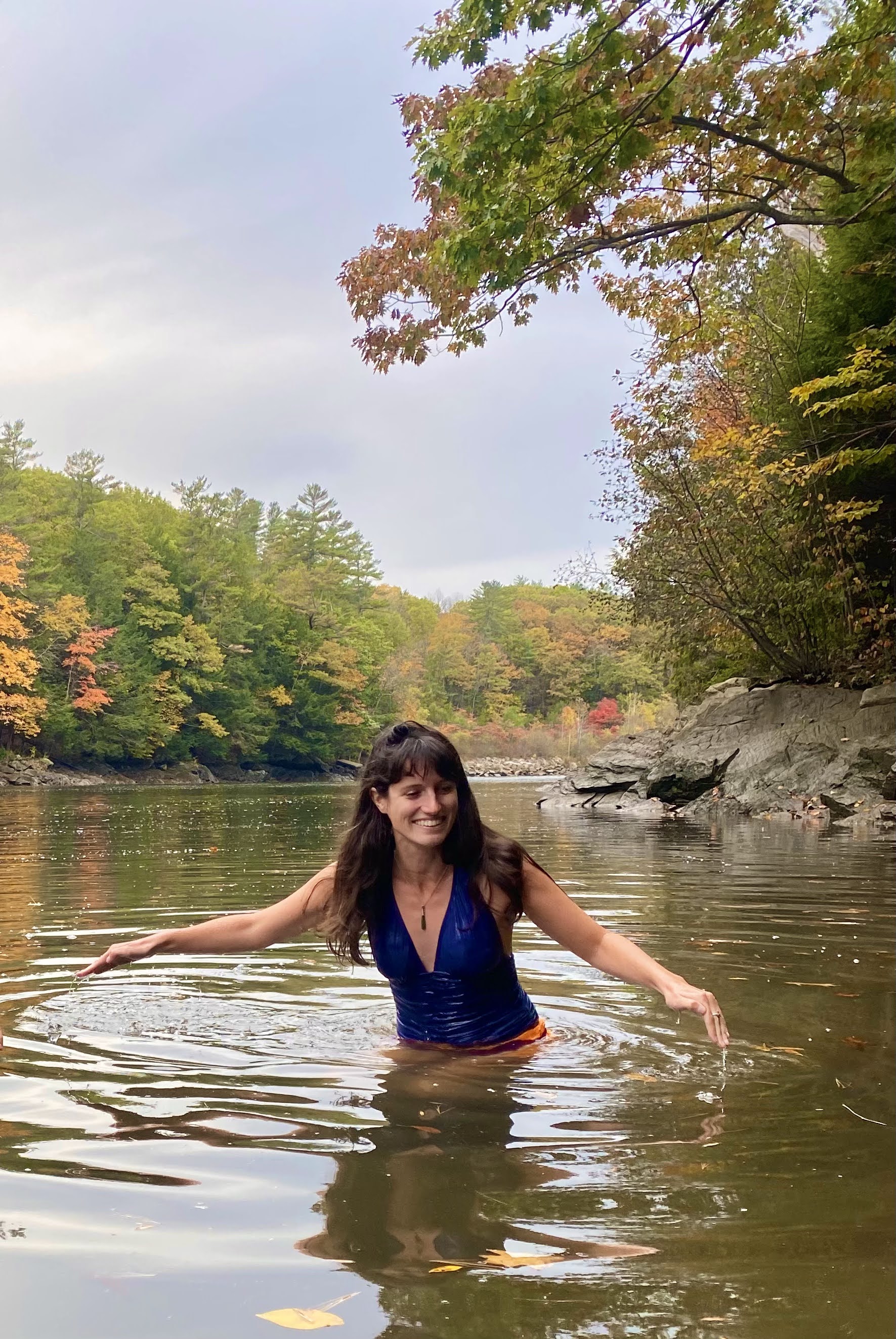
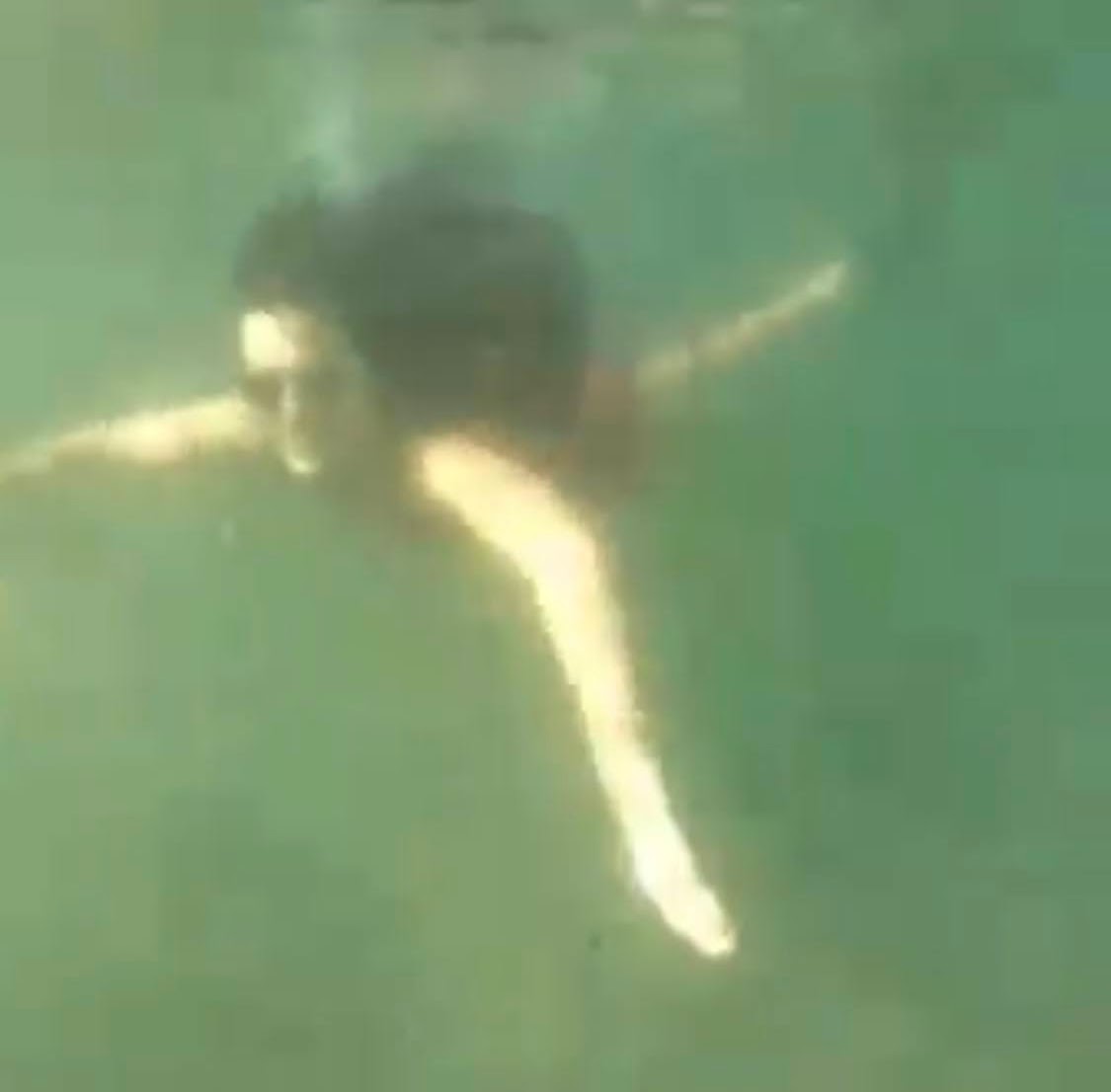
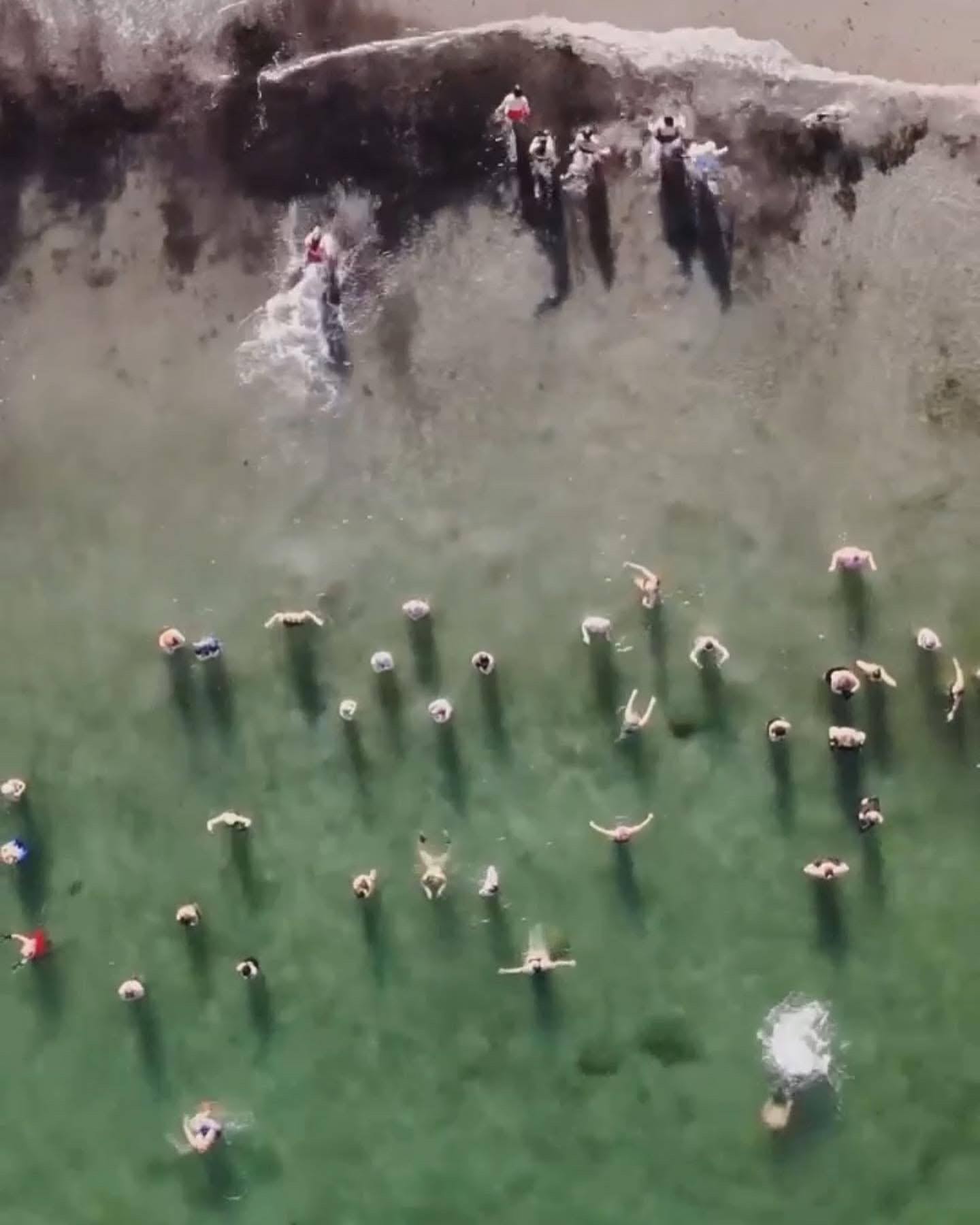
I wore neoprene booties and neoprene gloves when December hit, and in February I kept my hands out of the water because I’d started to develop an alarming feeling post-swim, a sensation that my bones were being crushed as they thawed. The water’s warmed up a bit now and it’s fine; the important part, they tell us at every Full Moon Swim, is to listen to your body and not push it. I didn’t put my head under except for one exhilarating swim – the International Women’s Day swim, which was my 1-year anniversary with the Two Maine Mermaids group, and which had over 60 women all swimming together on March 4th, off Willard Beach. My friend had a GoPro so of course I swam underwater for her.
So that’s about it! I first got into this last winter thanks to Katherine May’s Wintering, and I will certainly continue it through the spring, summer, and once again into the fall. With the sea right there, how you could not, after all, get into it?

New Religion
by Bill Holm
This morning no sound but the loud
breathing of the sea. Suppose that under
all that salt water lived the god
that humans have spent ten thousand years
trawling the heavens for.
We caught the wrong metaphor.
Real space is wet and underneath,
the church of shark and whale and cod.
The noise of those vast lungs
exhaling: the plain chanting of monkfish choirs.
Heaven’s not up but down, and hell
is to evaporate in air. Salvation,
to drown and breathe
forever with the sea.
 Jill McLaughlin